Text
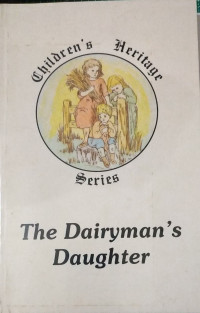
Children's Heritage Series: The Dairyman's Daughter
The Dairyman's Daughter is an early 19th century Christian booklet, which had a remarkably wide distribution and influence. It was a narrative of the true experience of Elizabeth Wallbridge, who was the person after whom the book was named. Elizabeth Wallbridge was born, lived and died in the Parish of Arreton, Isle of Wight, England. Her parents although worthy were of the lowly ranks of the poor, and their children were put to service at an early age. The author of the narrative was Rev. Legh Richmond, a religious writer of the period, who was the curate of the neighbouring parish of Brading. According to the account in the book, Miss Wallbridge's life until the age of 26 was of the most worldly character. Never immoral, she was willful, proud, selfish and irreligious. Her life was, however, transformed by a sermon and she became very devout. With exceptional strength of mind, a retentive memory, the mastery of a few religious classics and enforced leisure because of illness, she devoted time and strength to the study of the Bible in which she became remarkably proficient. Miss Wallbridge, after a lingering sickness of a year and a half, died May 30, 1801, at the age of 31 years. During her illness Rev. Richmond often visited her and talked with her, and these discussions inspired him to write the book.
about the author:
LEGH RICHMOND (1772–1827) was born in Liverpool, England. He attended Trinity College in Cambridge and received his B. A. and M. A. degrees. The young clergyman entered the ministry at the Isle of Wight. When he read Wilberforce’s "Practical View of Christianity," he had a spiritual awakening, and respectfully named his son Wilberforce. On the Isle of Wight he met ‘The Dairyman’s Daughter,’ ‘The African Servant’ and ‘Little Jane.’ After seven years he moved to London and then to Turvey, where he wrote, "The Fathers of the English Church."
Ketersediaan
| TH00210 | THE Ric C.1 | Lantai_3 | Tersedia |
Informasi Detail
- Judul Seri
-
-
- No. Panggil
-
THE Ric C.1
- Penerbit
- : Old Path - Gospel Press.,
- Deskripsi Fisik
-
86 halaman
- Bahasa
-
English
- ISBN/ISSN
-
-
- Klasifikasi
-
THE
- Edisi
-
-
- Subjek
-
-
- Info Detail Spesifik
-
-
- Pernyataan Tanggungjawab
-
-
Versi lain/terkait
Tidak tersedia versi lain
 Christian Life
  Theological Studies
  Bacaan Anak-Anak
  Biografi